Group Working
Jon Reades & Leah Lovett - j.reades@ucl.ac.uk
22nd October 2026
Why?
(Are you here?)
Why?
(Is it group work?)
Many Models…
- Artist Collectives — shared responsibilities for ideas and outputs; a lot of freedom and fuzziness in roles, but propensity for struggles over direction and power.
- Theatre — every member has a specific role; there is freedom within the role and clear lines of responsibility for delivery, but can blow up spectacularly.
- Co-Creation — emphasis on participation and recognition of diverse strengths; problem- and communication-focused; lots of effort and uncertainty, but results can be much more meaningful and durable.
- …
Challenges
- We make superficial assessments of the flaws/strengths of others.
- We make a range of assumptions about the motivations of others.
- We make a range of assumptions about the situations of others.
- We respond differently to stimuli and stresses.
- We have a hard time talking about any of this.
Identifying Your Strengths
Dominance
- Results-oriented
- Innovative
- Competitive
- Direct
Influence
- People-oriented
- Enthusiastic
- Optimistic
- Creative
Steadiness
- Sincere
- Dependable
- Patient
- Modest
Conscientiousness
- Accurate
- Cautious
- Precise
- Analytical
Too Much of a Good Thing
Dominance
- Fails to involve others
- Impatient
- Offensive
Influence
- Too social
- Easily distracted
- Overly optimistic
Steadiness
- Indirect
- Avoids conflict
- Delays difficult decisions
Conscientiousness
- Perfectionist
- Avoids unsystematic people
- Delays decisions over risks
Your Turn
With the person next to you (3 minutes):
- Which of the four is closest to you?
- What does too much of it look like when you’re under pressure?
Consequences1

Every Good Plan1…
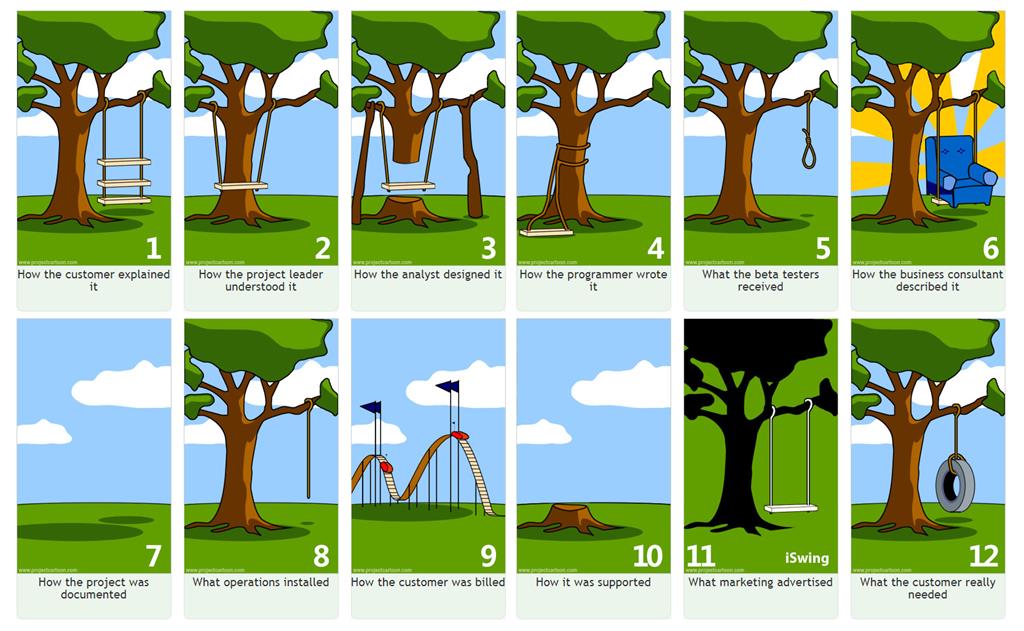
Nothing Ever Goes to Plan
From relational to practical…
- Agile1: deliver something that works early, then improve it; respond to change.
- Scrum2: short stand-ups, sprints, reviews, and retrospectives.
- Kanban: sticky notes in columns (to do, doing, done).
- XP: one person codes while a partner checks and feeds back.
To Do: discuss how your team can work together effectively.1
In FSDS
- Groups of no more than five.
- Sign-up opens Monday 26 October and closes Monday 2 November.
- Not in a group by then? We’ll match you to a group with space by the practical on Thursday 5 November.
- Sequencing:
- Reading Week: literature scan.
- Week 6: questions about lit you found.
- Weeks 7–9: draft answers + getting to know Quarto.
- Peer evaluation is due Tuesday, 15 December 2026, the day before the submission (Wednesday, 16 December 2026).
- Your GitHub commit history is our evidence of who did what.
Go Groups!
Opens Monday 26 October @ 11:00.
Additional Resources
Thank You
References
Brooks, F. P. 1975. The Mythical Man-Month. Addison-Wesley.
Lencioni, Patrick M. 2002. The Five Dysfunctions of a Team: A Leadership Fable. John Wiley & Sons.
